Warehouse management in Sabah and Sarawak: how barcode systems and WMS cut costly stock errors
Why every stock error costs more in East Malaysia, and how barcode systems and a WMS help distributors in Kota Kinabalu, Kuching and Miri keep stock accurate.
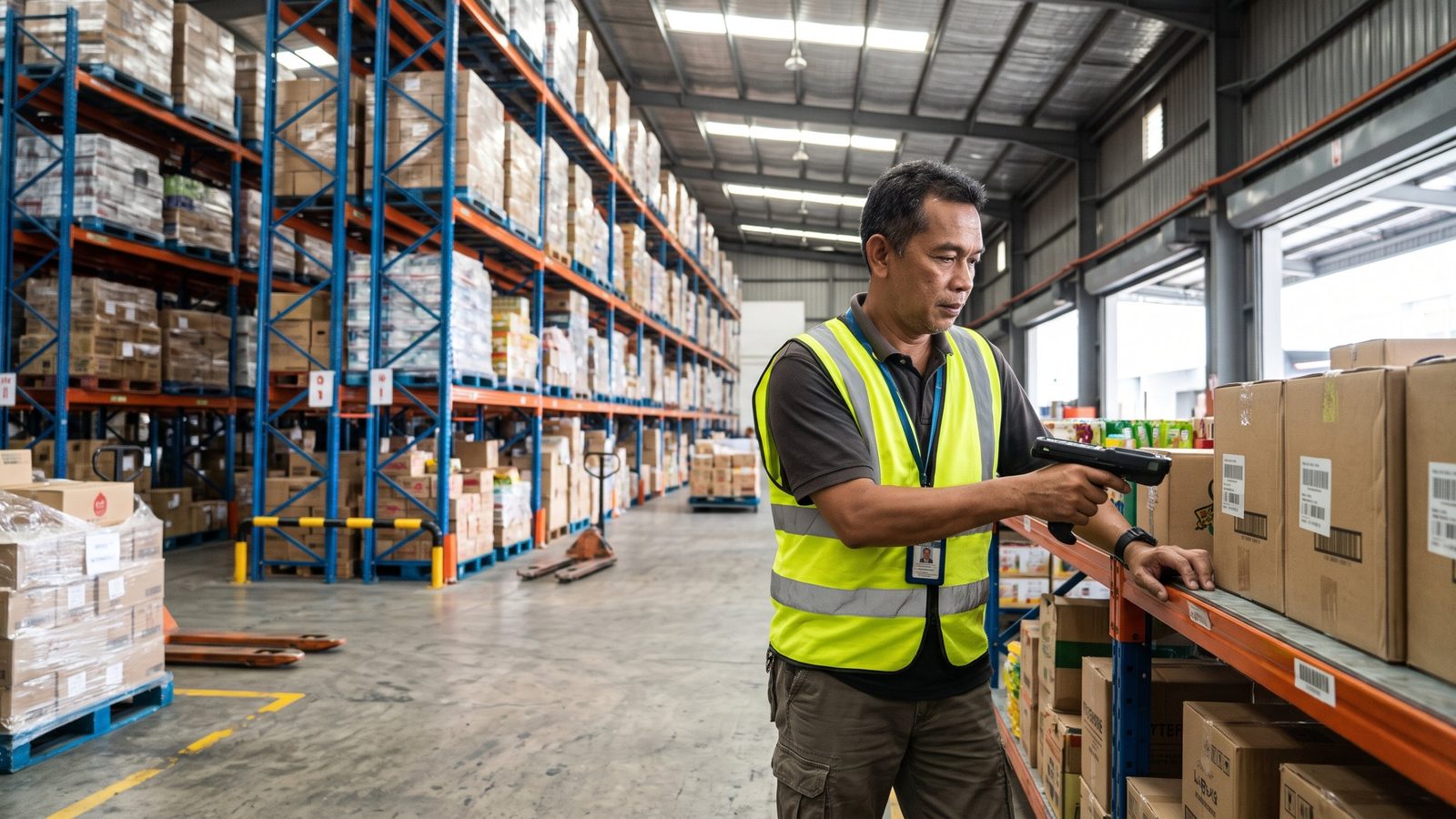
For distributors and retailers in Kota Kinabalu and Kuching, a stock error is not just a counting problem. It is a shipping problem.
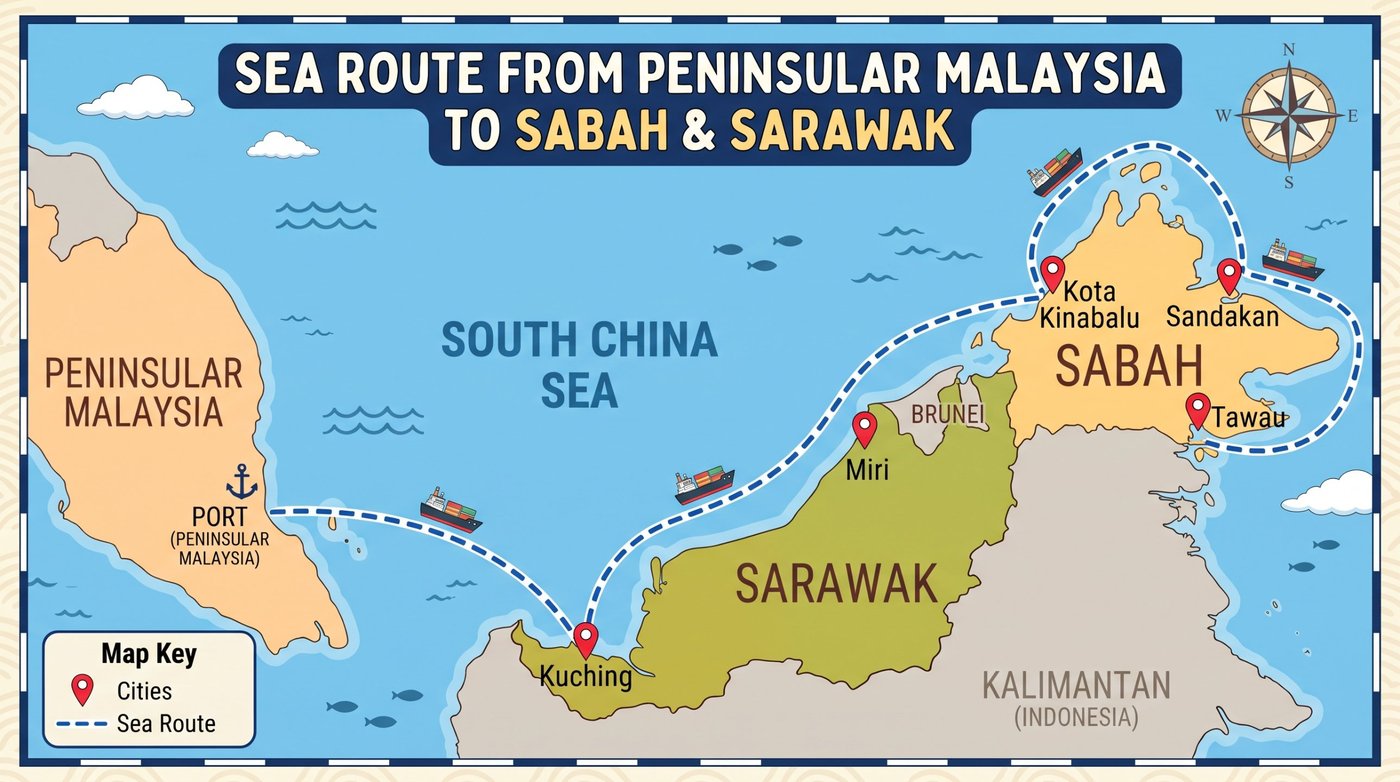
Much of what is sold in Sabah and Sarawak arrives by sea from Peninsular Malaysia or overseas. When a carton goes missing, gets picked wrongly, or the system shows stock that is not on the shelf, the replacement does not come on tomorrow's lorry. It comes on the next sailing, and the cost of moving goods to East Malaysia is already one of the main reasons prices are higher here.
This guide explains how barcode systems and a warehouse management system (WMS) help businesses in Sabah and Sarawak keep stock accurate, whether the warehouse sits in KKIP or Kolombong, Pending or Demak Laut, or Kuala Baram in Miri.
Why stock mistakes cost more in East Malaysia
The same mistake that is a small headache in Shah Alam can be an expensive problem in Kota Kinabalu or Kuching. Four reasons:
- Every carton costs more to bring in. Shipping from Peninsular Malaysia adds cost before the goods even reach the warehouse. A lost or damaged carton means paying that cost again.
- Replacing stock takes longer. Restocking depends on sailing schedules, not on a lorry from down the road. If the system says there are 50 units and the shelf has 20, customers wait until the next shipment lands.
- Ports can be delayed. At the end of 2025, two mobile cranes broke down at Karamunting Port in Sandakan, and containers were delayed until mid January. Delays like this happen, and accurate stock levels are the only buffer.
- Festive peaks arrive together. Chinese New Year, Kaamatan in Sabah, Gawai in Sarawak and Christmas all bring demand spikes, often when shipping space is tightest.
In East Malaysia, a stock error is paid for twice: once in the lost sale, and again in the extra shipment.
Common warehouse problems for distributors in Sabah and Sarawak
Whether it is a food distributor in Kolombong, a hardware supplier in Pending or an oil and gas parts store in Kuala Baram, the same problems come up again and again:
- Stock "in transit" that nobody can find. Goods are paid for and shipped, but the system cannot show which container they are in or when they will arrive.
- Transfers between branches go missing. Stock moved from Kota Kinabalu to Sandakan or Tawau, or from Kuching to Miri, about 800 km by road, leaves one branch but never quite arrives in the system at the other.
- Only one person knows where everything is. When the senior storekeeper is on leave, picking slows down and mistakes go up.
- Excel and WhatsApp as the stock system. Counts are updated at the end of the day, if at all, so sales staff promise stock that is already gone.
- Expiry dates checked by eye. For F&B and FMCG distributors, older batches get left behind and written off.
- Stock take means closing for the weekend. Staff count by hand, and the numbers still do not match.
Step 1: get the basics right with barcodes
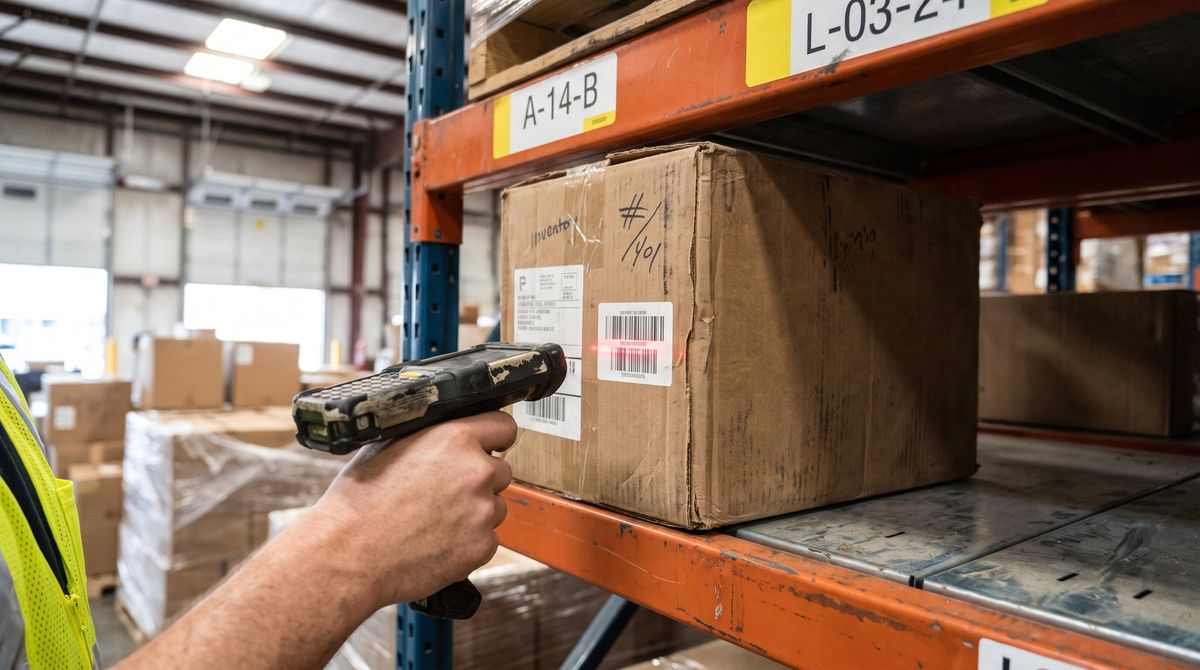
The first fix is usually not a big software project. It is making sure every item in and out is scanned, not typed. This is called AIDC, short for Automatic Identification and Data Capture.
| Tool | What it fixes |
|---|---|
| Barcode scanner | Receiving and packing errors. Scan each carton on arrival and each order before it is sealed |
| Label printer | Items and racks without labels. Print durable barcodes for products, shelf locations and cartons |
| Mobile computer | Slow picking and late stock updates. Staff see the exact rack and confirm each pick while walking the aisles |
| RFID reader and tags | Long stock takes. Reads many tagged items at once, useful for high value or fast moving stock |
Most scanners and label printers work with the system already in use, such as AutoCount, SQL Account, a POS or an online store. For a closer look at each tool:
Step 2: when a WMS becomes worth it
Barcodes fix the data going in. A warehouse management system decides what happens with it: where each item is stored, which batch to pick first, and what is moving between branches.
A WMS is usually worth it when the business has two or more of these:
- More than one warehouse or branch, for example Kota Kinabalu and Tawau, or Kuching and Miri
- Hundreds or thousands of products
- Several pickers working at the same time
- Batch, lot or expiry dates to follow, such as FIFO or FEFO for food and FMCG
- Sales through shops, wholesale and online at once, all from the same stock
For East Malaysia businesses, the biggest gain is usually one live view of stock across every branch and every shipment in transit. Sales staff in Kuching can see what is in Miri before promising a delivery, and nobody reorders stock that is already on the water.
Sinar Niaga’s WMS, awarded MSC status by MDEC, is built for manufacturers, distributors and logistics companies. Related reading:
- Warehouse management system (WMS) Malaysia
- Managing stock across branches in Sabah and Sarawak
- 5 signs your Malaysian warehouse needs a WMS
- FIFO, FEFO and batch tracking for F&B distributors
How Sinar Niaga supports businesses in Sabah and Sarawak
Sinar Niaga Solutions is based in Petaling Jaya and works with businesses across Sabah and Sarawak:
- Delivery: hardware usually arrives in Kota Kinabalu, Kuching, Miri, Sandakan and Tawau within 1 to 2 weeks*.
- Remote assessment and setup: the warehouse is reviewed by video call, devices arrive configured, and staff are trained online.
- Demos: remote demos for every enquiry, and on site demos can be arranged for qualified projects*.
- Brands: Zebra, Honeywell, HID and Newland hardware, with software that connects to the systems already in use.
Going digital in Sarawak and Sabah
Both states are pushing businesses to digitalise. Sarawak aims to have 30,000 micro, small and medium businesses using digital platforms by 2030 under its Post Covid Development Strategy (PCDS 2030), and MDEC launched its Business Digitalisation Initiative in Kuching together with the Sarawak Digital Economy Corporation (SDEC). In Sabah, industrial demand is strong enough that land for sale at KKIP is fully taken, and small manufacturers are looking for ways to do more with the space they have.
For most distributors and manufacturers, barcode scanning and proper stock control are the most practical first step: low cost, quick to set up, and the results show in the next stock take.
Frequently asked questions
Do you serve businesses in Sabah and Sarawak?
Yes. Sinar Niaga works with businesses in Kota Kinabalu, Kuching, Miri, Sandakan and Tawau. Assessment, setup and training are done remotely, and on site demos can be arranged for qualified projects*.
How long does delivery to Kota Kinabalu or Kuching take?
Delivery to Kota Kinabalu, Kuching and other towns in Sabah and Sarawak usually takes 1 to 2 weeks after the order is confirmed*.
Can setup and training be done remotely?
Yes. Devices are configured before shipping, and staff are trained by video call. Most barcode setups are running within days of the hardware arriving.
Will the system work with AutoCount, SQL Account or our POS?
In most cases, yes. Barcode scanners work like a keyboard, so they type into almost any system. Mobile computers, RFID and WMS connections are checked during the free assessment.
Can we see a demo before buying?
Yes. A remote demo shows the scanners and software working with sample stock, by video call. For qualified projects, an on site demo at your warehouse can be arranged*.
Ready to cut stock errors in your Sabah or Sarawak warehouse?
Whether your warehouse is in KKIP, Kolombong, Pending, Demak Laut or Kuala Baram, accurate stock starts with knowing what is on the shelf, what is in transit and what is at the other branch.
Call us or WhatsApp us today for a free remote warehouse assessment*, and find out where your stock is slipping and what it costs your business.
*Terms and conditions apply.